
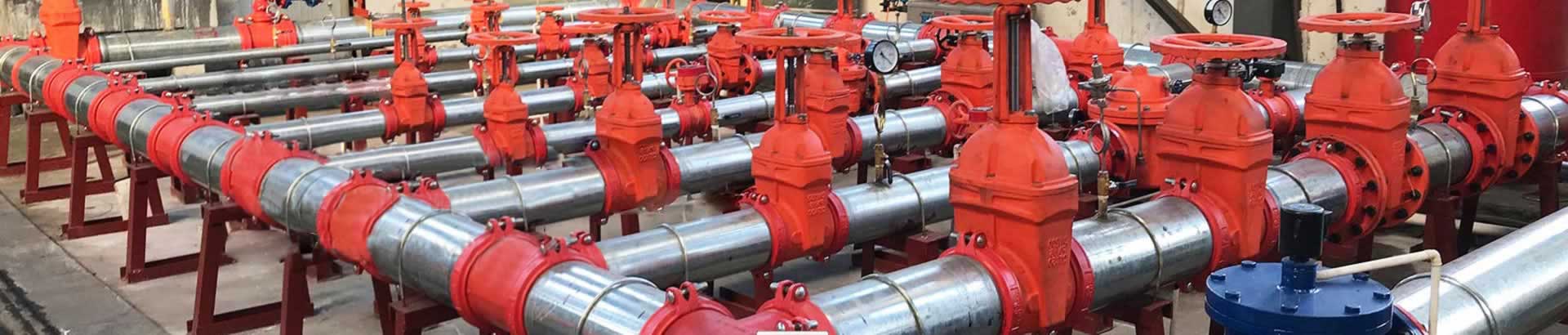
In industrial piping systems, controlling the flow of liquids, gases, steam, and other process media is essential for safe and efficient operation. Different valve designs are used for different purposes, and the globe valve is particularly well known for its ability to regulate and control flow.
When operating conditions involve high pressure, high temperature, or demanding industrial media, cast steel globe valves can provide the strength and control characteristics required by many process systems.
Unlike valves that are primarily intended for simple isolation, a globe valve is designed around a throttling principle. The movement of the valve disc toward or away from the seat changes the available flow passage, allowing the operator to control the flow through the pipeline.
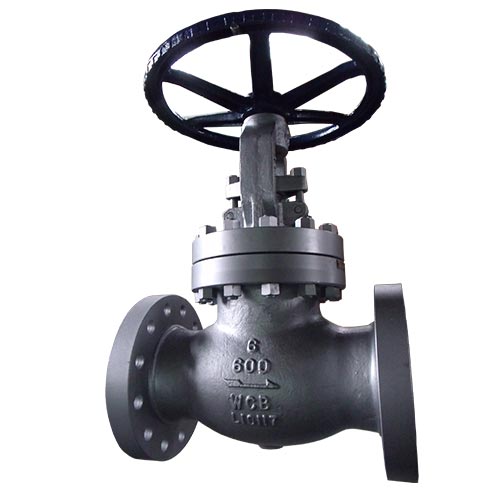
What Is a Cast Steel Globe Valve?
A cast steel globe valve is a linear-motion valve manufactured with a cast steel body and internal components designed to control fluid flow.
The basic structure typically consists of a valve body, bonnet, stem, disc or plug, seat, and operating mechanism. When the handwheel or actuator moves the stem, the closure element moves toward or away from the valve seat.
This movement changes the opening available for the process fluid.
Because of this design, globe valves can be used not only to shut off flow but also to regulate flow under appropriate operating conditions.
Cast steel construction is commonly selected for industrial applications where mechanical strength and resistance to demanding operating environments are important considerations.
How Does a Globe Valve Control Flow?
The fundamental operating principle of a globe valve is relatively simple.
When the valve is closed, the disc moves against the seat and restricts the passage of fluid. As the stem is raised, the disc moves away from the seat, creating a larger flow path.
Unlike a ball valve, which uses rotational movement, a globe valve uses linear stem movement.
This makes the valve particularly suitable for applications where gradual changes in flow are required.
The relationship between stem movement and flow can depend on the design of the disc and seat. Different plug configurations, including plug, needle, and parabolic throttling designs, can be selected according to the intended service.
Why Is Cast Steel Used for Globe Valves?
Material selection is one of the most important considerations in industrial valve design.
Cast steel provides a combination of mechanical strength and resistance to demanding process conditions. Depending on the operating environment, different cast steel grades may be selected.
Common materials used for industrial cast steel globe valves include carbon steel and various alloy or stainless steel grades.
The appropriate material depends on factors such as:
- Operating temperature
- Operating pressure
- Fluid composition
- Corrosion potential
- Mechanical loading
- Applicable industry standards
For example, carbon steel may be suitable for many general industrial services, while alloy or stainless steel materials may be selected when higher temperature performance or improved corrosion resistance is required.
Globe Valve vs. Gate Valve
Globe valves and gate valves are both widely used in industrial piping, but their intended functions are different.
A gate valve is generally used for on/off isolation. When fully open, its flow passage can provide relatively low resistance to flow. It is normally not the preferred choice for continuous throttling.
A globe valve, on the other hand, is better suited to applications where flow needs to be adjusted.
The internal flow path of a globe valve creates greater pressure loss than a fully open gate valve, but that same design allows more controlled regulation.
The choice therefore depends on the actual requirements of the piping system rather than simply the pressure rating or valve size.
Globe Valve vs. Ball Valve
Ball valves use a rotating ball with a bore through the center. They are widely used where fast shutoff and relatively low flow resistance are important.
Globe valves use linear movement and are more naturally suited to regulating flow.
A ball valve may therefore be preferred for applications requiring quick isolation, while a globe valve can be more appropriate when gradual flow adjustment is part of normal operation.
Neither valve type is universally better. The correct choice depends on the process, flow requirements, operating frequency, pressure drop, and control requirements.
Applications of Cast Steel Globe Valves
Cast steel globe valves are used across a wide range of industrial sectors.
Oil and Gas
Oil and gas facilities contain numerous high-pressure and high-temperature piping systems. Globe valves can be used where reliable isolation and flow regulation are required.
Chemical Processing
Chemical plants may handle aggressive, corrosive, or high-temperature media. Valve materials and sealing arrangements must therefore be selected according to the specific process conditions.
Power Generation
Steam and other high-temperature fluids are common in power plants. Globe valves can be used in systems where controlled flow and reliable shutoff are required.
Petrochemical Facilities
Petrochemical processing involves demanding pressure, temperature, and media conditions. Properly selected cast steel valves can form part of the process piping infrastructure.
Metallurgical Industry
High-temperature process fluids and demanding operating environments are common in metallurgical facilities, making material selection and valve construction particularly important.
Pressure Rating Is a Critical Selection Factor
A valve should never be selected based solely on nominal pipe size.
Pressure rating is equally important.
Industrial globe valves are available across a wide range of pressure classes. Depending on the design, applications may require anything from moderate-pressure service to very high-pressure systems.
For example, API-style cast steel globe valve designs can cover pressure classes such as Class 150 through Class 2500.
However, the pressure rating should always be evaluated together with operating temperature and the selected material.
The allowable working pressure of a valve can change as temperature increases, so simply matching the nominal pressure class is not enough for a complete engineering assessment.
Temperature and Material Selection
High-temperature applications place additional demands on valve materials and sealing components.
A material that performs well under normal ambient conditions may not be suitable for a high-temperature process.
This is why industrial valve specifications may include materials such as WCB, LCB, WC1, WC6, WC9, C5, CF3, CF3M, and CF8M, among others.
The choice should be based on the actual service conditions rather than selecting a material simply because it has a higher alloy content.
Engineers should consider the complete combination of:
Pressure + Temperature + Media + Corrosion + Mechanical Requirements
when determining the appropriate valve material.
Valve End Connections Matter
The connection between the valve and the pipeline is another important consideration.
Depending on the piping system, globe valves may be supplied with different end configurations, including:
- Flanged ends
- Butt-weld ends
- Raised-face connections
- Ring-type joint connections
The appropriate connection must match the pipeline design and applicable flange or piping standards.
For industrial applications, dimensional compatibility is essential because even a correctly rated valve cannot be installed properly if the end connection does not match the surrounding piping system.
What Is a Bellows Seal Globe Valve?
In applications where external stem leakage must be minimized, a bellows seal design may be considered.
A bellows creates a physical barrier between the process medium and the external environment around the valve stem.
This can be particularly relevant when the process fluid is hazardous, toxic, volatile, or otherwise unsuitable for atmospheric leakage.
Bellows-sealed globe valves are therefore often associated with demanding process applications where emission control and leakage prevention are important design considerations.
Straight, Angle, and Reverse-Flow Designs
Globe valves are not limited to a single body configuration.
Straight-pattern designs are commonly used in conventional pipeline arrangements, while angle-pattern globe valves can be useful where the piping layout changes direction.
For larger valves, the direction of flow can also influence operating requirements.
In certain designs, reverse flow can reduce the operating force required under specific conditions. The appropriate configuration should therefore be determined according to valve size, pressure differential, installation arrangement, and operating requirements.
Manual or Actuated Operation?
The operating method is another factor to consider.
Smaller or less frequently operated valves may use a conventional handwheel.
For larger valves, manual operation can require significant effort because of the pressure differential and mechanical load. In such cases, gear operators or other actuation systems may be used.
Depending on the application, globe valves can be equipped with:
- Handwheel operation
- Chainwheel operation
- Bevel gear operation
- Electric actuators
- Pneumatic actuators
The choice depends on valve size, operating frequency, accessibility, automation requirements, and available plant utilities.
Maintenance Considerations
Even a robust industrial valve requires proper maintenance.
Routine inspection can help identify problems before they affect the wider piping system.
Important maintenance points include:
Check for External Leakage
Inspect the valve body, bonnet, stem area, and connections for signs of leakage.
Inspect the Stem
The stem should move smoothly without excessive resistance or visible damage.
Check the Packing
Stem packing can deteriorate over time and may require adjustment or replacement.
Keep Moving Components Clean
Dirt and corrosion around operating components can increase friction and make valve operation more difficult.
Inspect the Seat and Closure Element
Wear or damage to the seating surfaces can affect shutoff performance and flow control.
Follow the Manufacturer’s Maintenance Requirements
Maintenance intervals depend on operating conditions, fluid characteristics, valve design, and frequency of operation.
Choosing the Right Cast Steel Globe Valve
Selecting a globe valve for an industrial project involves more than choosing the correct diameter.
The following factors should be reviewed before specifying a valve:
Valve size: The valve must correspond to the pipeline and required flow conditions.
Pressure class: The valve must withstand the maximum expected pressure at the relevant operating temperature.
Material: The body and internal materials should be compatible with the process medium and operating environment.
End connection: Flanged, welded, and other connection types must match the piping system.
Flow direction: The installation orientation and pressure differential should be considered.
Disc design: Different closure designs can provide different flow-control characteristics.
Actuation: Manual, gear-operated, electric, or pneumatic operation may be selected depending on the application.
Applicable standards: Design, dimensions, testing, and inspection should comply with the standards specified for the project.
For example, cast steel globe valve designs may be manufactured according to BS 1873 and API 623, with face-to-face and testing requirements referenced to standards such as ASME B16.10 and API 598.
Final Thoughts
Cast steel globe valves remain an important option for industrial fluid control because their linear-motion design provides a useful combination of shutoff and flow-regulation capabilities.
Their suitability for demanding applications depends on much more than the valve body material. Pressure rating, temperature, process media, sealing arrangement, end connection, flow direction, and operating method all influence the final valve selection.
For applications in oil and gas, chemical processing, power generation, petrochemical production, and other heavy industries, selecting a globe valve based on actual process conditions is essential.
A well-matched valve can contribute to reliable flow control and long-term piping system performance, while incorrect material, pressure, or configuration choices can lead to premature wear and operational problems.
For this reason, cast steel globe valve selection should always begin with the operating conditions of the system rather than the valve size alone.